


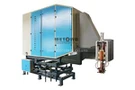
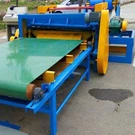


As a seasoned supplier of annealing equipment, I've witnessed firsthand the critical role that regulations and certifications play in the industry. Annealing, a heat treatment process used to alter the physical and sometimes chemical properties of a material to increase its ductility and reduce its hardness, is a delicate operation that requires strict adherence to safety and quality standards. In this blog, I'll delve into the key regulations and certifications for annealing equipment, providing insights that are essential for both manufacturers and end - users.
International and National Regulations
ISO Standards
The International Organization for Standardization (ISO) has developed a series of standards that are widely recognized across the globe. ISO 9001, for instance, is a quality management system standard. For annealing equipment suppliers, achieving ISO 9001 certification demonstrates that our company has a well - defined quality management process in place. This includes everything from design and development to production, installation, and servicing of the annealing equipment.
ISO 14001 is another important standard. It focuses on environmental management. Annealing processes can consume significant amounts of energy and may produce waste products. By complying with ISO 14001, we as a supplier are committed to minimizing our environmental impact. This could involve using energy - efficient technologies in our Offline Entire Annealing Machine or implementing proper waste management procedures during the manufacturing process.


ASME Codes
The American Society of Mechanical Engineers (ASME) codes are crucial in the United States and many other countries. ASME Boiler and Pressure Vessel Code (BPVC) is of particular importance for annealing equipment. Many annealing furnaces and related pressure - containing components fall under the scope of this code. The BPVC sets strict rules for the design, fabrication, inspection, and testing of pressure vessels. For example, if our Online Seam M.F Annealing Equipment has pressure - related components, they must be designed and manufactured in accordance with the relevant sections of the BPVC to ensure safety and reliability.
CE Marking
In the European Union, the CE marking is a mandatory conformity mark for many products, including annealing equipment. The CE marking indicates that the product meets all the relevant EU health, safety, and environmental protection requirements. To obtain the CE marking, our equipment must comply with directives such as the Machinery Directive, the Low Voltage Directive, and the Electromagnetic Compatibility Directive. For our MF Seam Annealing Euipment, this means that it has been tested to ensure that it operates safely, does not pose a risk of electrical shock, and does not cause electromagnetic interference to other equipment.
Industry - Specific Certifications
Nadcap
The National Aerospace and Defense Contractors Accreditation Program (Nadcap) is a globally recognized program for special processes, including heat treatment such as annealing. Nadcap accreditation is highly valued in the aerospace and defense industries. It involves a rigorous audit process by independent assessors. For suppliers like us, achieving Nadcap accreditation for our annealing equipment means that our processes meet the strict quality and safety requirements of these high - performance industries. It gives our customers in the aerospace and defense sectors confidence that our equipment can produce high - quality annealed parts that meet their exacting standards.
CQI - 9
The Automotive Industry Action Group (AIAG) developed the Continuous Quality Improvement - 9 (CQI - 9) standard for heat treatment systems. This standard is specifically tailored to the automotive industry. It focuses on process control, equipment calibration, and personnel qualification in heat treatment processes. If our annealing equipment is used in the automotive supply chain, complying with CQI - 9 is essential. It ensures that the annealed parts produced by our equipment meet the quality and performance requirements of automotive manufacturers.
Safety Regulations
OSHA Requirements
In the United States, the Occupational Safety and Health Administration (OSHA) sets regulations to protect workers' safety. For annealing equipment, OSHA regulations cover aspects such as machine guarding, electrical safety, and ventilation. Our equipment must be designed with proper machine guards to prevent workers from coming into contact with moving parts or hot surfaces. Adequate ventilation systems are also required to remove harmful fumes and gases generated during the annealing process.
ATEX Directive
In Europe, the ATEX Directive is relevant for equipment used in potentially explosive atmospheres. If our annealing equipment is used in an environment where there is a risk of explosion, such as in a facility handling flammable gases or dust, it must comply with the ATEX Directive. This involves ensuring that the equipment is designed and constructed to prevent ignition sources and to be safe to operate in such hazardous environments.
Benefits of Complying with Regulations and Certifications
Enhanced Product Quality
Complying with regulations and certifications ensures that our annealing equipment is of high quality. The standards and codes are based on best practices and extensive research. By following them, we can produce equipment that is more reliable, efficient, and consistent in its performance. This means that our customers can expect better - quality annealed products, which in turn can improve their own manufacturing processes and the quality of their end products.
Market Access
Many industries and regions require products to meet specific regulations and certifications. By having our annealing equipment certified, we can access a wider market. For example, the CE marking allows us to sell our equipment in the European Union, and Nadcap accreditation opens doors in the aerospace and defense sectors. This not only increases our business opportunities but also helps us build a reputation as a reliable and compliant supplier.
Risk Mitigation
Complying with regulations and certifications helps us mitigate risks. It reduces the likelihood of product failures, accidents, and legal issues. For instance, by following OSHA requirements, we can prevent workplace accidents, which can save us from costly lawsuits and damage to our reputation.
Conclusion
As a supplier of annealing equipment, we understand the importance of regulations and certifications. They are not just bureaucratic hurdles but are essential for ensuring the safety, quality, and performance of our products. Whether it's the international ISO standards, industry - specific certifications like Nadcap and CQI - 9, or safety regulations such as OSHA and ATEX, each plays a vital role in our business.
If you are in the market for high - quality annealing equipment that meets all the necessary regulations and certifications, we invite you to contact us for a procurement discussion. We are committed to providing you with the best - in - class annealing solutions tailored to your specific needs.
References
- International Organization for Standardization (ISO) standards documentation
- American Society of Mechanical Engineers (ASME) Boiler and Pressure Vessel Code
- European Union directives related to CE marking, ATEX Directive
- Occupational Safety and Health Administration (OSHA) regulations
- National Aerospace and Defense Contractors Accreditation Program (Nadcap) requirements
- Automotive Industry Action Group (AIAG) CQI - 9 standard