


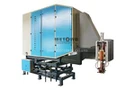
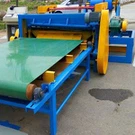


In the realm of manufacturing, production efficiency stands as a cornerstone for success. One often overlooked yet incredibly vital piece of equipment that significantly contributes to enhancing this efficiency is the decoiler. As a leading decoiler supplier, I've witnessed firsthand how these machines revolutionize production processes across various industries. In this blog, I'll delve into the ways a decoiler can improve production efficiency and why it's a worthy investment for your manufacturing operations.
Understanding the Decoiler
Before we explore how a decoiler boosts efficiency, let's first understand what it is. A decoiler, also known as an uncoiler, is a machine designed to unwind coiled materials such as metal sheets, strips, or wires. It serves as the initial step in many manufacturing processes, feeding the material smoothly and continuously into subsequent machinery for further processing, such as cutting, stamping, or welding.
Continuous Material Feeding
One of the primary ways a decoiler improves production efficiency is by enabling continuous material feeding. In traditional manufacturing setups, manually unwinding coiled materials is a time - consuming and labor - intensive process. Workers have to stop the production line periodically to change coils, which leads to significant downtime.
With a decoiler, this problem is eliminated. The machine can hold large coils of material and unwind them steadily, providing a continuous supply of material to the production line. This uninterrupted flow ensures that the downstream processes can operate at their maximum capacity without being interrupted by coil changes. For example, in a metal stamping operation, a decoiler can feed a continuous strip of metal into the stamping press, allowing it to produce parts at a consistent rate. This not only increases the overall output but also reduces the time wasted on coil handling.
Precise Material Tension Control
Another crucial aspect of a decoiler is its ability to control the tension of the unwound material. Maintaining the right tension is essential for ensuring the quality of the final product and the smooth operation of the production line.
If the tension is too high, it can cause the material to stretch or break, leading to production defects and downtime for repairs. On the other hand, if the tension is too low, the material may sag or bunch up, which can also disrupt the production process. A high - quality decoiler is equipped with advanced tension control systems that can adjust the tension in real - time based on the speed of the production line and the characteristics of the material.
For instance, in a tube manufacturing process, a Single Head Decoiler can precisely control the tension of the metal strip being fed into the tube mill. This ensures that the tube is formed with consistent wall thickness and diameter, reducing the number of defective products and improving the overall quality of the output.
Quick Coil Changeover
In manufacturing, time is money, and minimizing the time spent on coil changeovers is crucial for improving production efficiency. Modern decoilers are designed with features that allow for quick and easy coil changeovers.
Some decoilers are equipped with hydraulic or pneumatic systems that can lift and position new coils rapidly. Others have automatic coil threading mechanisms, which eliminate the need for manual threading and reduce the time required to start a new coil. For example, a Double Arms Uncoiler can hold two coils simultaneously. When one coil is almost exhausted, the machine can quickly switch to the second coil without stopping the production line, ensuring continuous operation.
Compatibility with Different Materials and Sizes
Manufacturers often work with a variety of materials and coil sizes. A good decoiler should be able to handle different types of materials, such as steel, aluminum, copper, and various coil widths and diameters.
Our decoilers are designed with adjustable components that can be easily configured to accommodate different material specifications. This versatility allows manufacturers to use the same decoiler for multiple production runs, reducing the need for multiple machines and saving on equipment costs. For example, a Double Head Decoiler can handle two different coils at the same time, providing flexibility in production. It can be used to produce different products with different materials or coil sizes without the need for extensive reconfiguration.
Integration with Automation Systems
In today's manufacturing landscape, automation is becoming increasingly important for improving efficiency and reducing costs. Decoilers can be integrated with other automated systems, such as robotic arms, conveyors, and control systems.


When integrated with a robotic arm, a decoiler can feed materials directly to the robot for further processing, eliminating the need for manual material handling. This not only speeds up the production process but also reduces the risk of human error. Additionally, decoilers can be connected to a central control system, which allows operators to monitor and adjust the machine's parameters remotely. This real - time monitoring and control ensure that the decoiler operates at its optimal performance, further enhancing production efficiency.
Reduced Labor Requirements
By automating the material unwinding process, a decoiler significantly reduces the need for manual labor. In traditional manufacturing setups, workers are required to stand by the coils, unwind the material, and monitor the tension. This is a repetitive and physically demanding task that can lead to fatigue and injuries.
With a decoiler, these tasks are automated, and workers can be redeployed to more skilled and value - added tasks. This not only improves the working conditions for employees but also reduces labor costs for the manufacturer. For example, in a large - scale metal processing plant, using decoilers can free up a significant number of workers who can then be assigned to tasks such as quality control or equipment maintenance.
Conclusion
In conclusion, a decoiler is a powerful tool that can greatly improve production efficiency in manufacturing. From providing continuous material feeding and precise tension control to enabling quick coil changeovers and integrating with automation systems, the benefits of using a decoiler are numerous.
As a decoiler supplier, we are committed to providing high - quality decoilers that meet the diverse needs of our customers. Our machines are designed with the latest technology and features to ensure maximum efficiency and reliability. If you're looking to enhance your production efficiency and take your manufacturing operations to the next level, we invite you to contact us for a consultation. We'll work with you to understand your specific requirements and recommend the most suitable decoiler for your business.
References
- "Handbook of Metal Forming" by George E. Dieter
- "Manufacturing Engineering and Technology" by Serope Kalpakjian and Steven R. Schmid