







In the realm of industrial cutting, friction saw blades are essential tools known for their efficiency and precision in slicing through various materials. As a dedicated supplier of friction saw blades, I've witnessed firsthand the crucial role that the saw's power plays in determining the performance of these blades. In this blog, we'll delve into the intricate relationship between the saw's power and the performance of friction saw blades, exploring how different power levels can impact cutting quality, blade lifespan, and overall productivity.
Understanding Friction Saw Blades
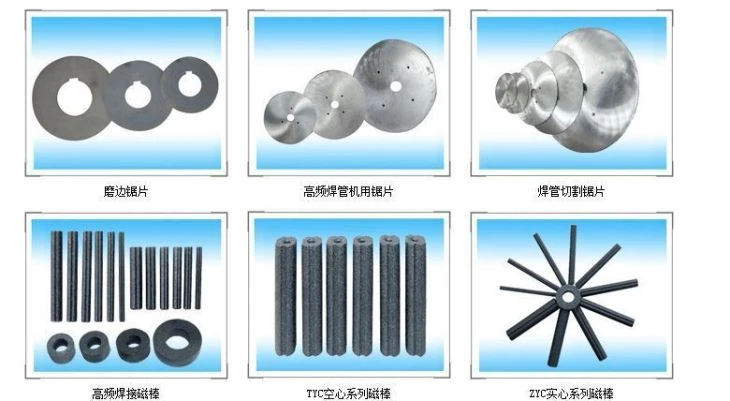
Before we dive into the influence of saw power, let's briefly understand what friction saw blades are and how they work. Friction saw blades operate on the principle of generating heat through friction. When the blade comes into contact with the workpiece, the high - speed rotation creates friction, which heats up the material to a point where it can be easily cut. These blades are commonly used for cutting metals such as steel, aluminum, and copper, and are favored for their ability to make fast and clean cuts.
Impact of Saw Power on Cutting Speed
One of the most obvious ways that saw power affects the performance of a friction saw blade is through cutting speed. A saw with higher power can rotate the blade at a faster speed, which generally leads to quicker cuts. When the blade spins at a high velocity, it generates more friction against the workpiece in a shorter period, allowing it to penetrate the material rapidly.
For example, in a manufacturing setting where large volumes of metal pipes need to be cut, a high - power saw can significantly reduce the cutting time per piece. This not only increases the overall productivity of the operation but also allows for more efficient use of labor and resources. On the other hand, a low - power saw may struggle to maintain a high cutting speed, resulting in longer processing times and potentially lower output.

Cutting Quality and Saw Power
The power of the saw also has a direct impact on the quality of the cut. A saw with sufficient power can ensure a smooth and clean cut. When the blade has enough power to cut through the material without hesitation, it reduces the likelihood of rough edges, burrs, or uneven cuts.
Insufficient power, however, can cause the blade to stall or drag through the material. This can lead to a variety of cutting defects, such as jagged edges, excessive heat buildup, and even damage to the blade itself. For instance, when cutting thick steel plates, a low - power saw may not be able to generate enough force to make a clean cut, resulting in a ragged edge that may require additional finishing work.
Blade Lifespan and Saw Power
Another important aspect to consider is the effect of saw power on the lifespan of the friction saw blade. A well - matched saw power can extend the blade's life. When the saw has the right amount of power, the blade can cut through the material efficiently without being over - stressed.
High - power saws, if used correctly, can actually reduce wear on the blade. Since they can make cuts quickly, the blade spends less time in contact with the material, minimizing the amount of friction and heat generated. This reduces the risk of blade deformation and premature wear.
Conversely, using a saw with too little power can be detrimental to the blade. The blade may have to work harder to cut through the material, leading to increased friction and heat. This can cause the blade to dull more quickly, and in severe cases, it may even cause the teeth of the blade to break off.
Compatibility of Saw Power and Blade Type
It's crucial to note that the influence of saw power on blade performance also depends on the type of friction saw blade being used. Different blades are designed for specific materials and cutting applications, and they require different levels of power to operate optimally.
For example, a thin - kerf friction saw blade, which is designed for making precise cuts in thin materials, may not need as much power as a thick - kerf blade used for cutting thick metal bars. Using a high - power saw with a thin - kerf blade may cause the blade to overheat and break, while using a low - power saw with a thick - kerf blade may result in poor cutting performance.
As a friction saw blade supplier, I always recommend that customers carefully consider the power requirements of their saws when selecting a blade. Matching the right blade with the appropriate saw power can ensure the best possible cutting results and maximize the lifespan of the blade.
The Role of Power in Specialized Cutting Applications
In some specialized cutting applications, such as cutting hardened metals or materials with complex geometries, the role of saw power becomes even more critical. Hardened metals require a significant amount of force to cut through, and a saw with high power is often necessary to achieve a successful cut.
For example, when cutting high - strength alloy steels, a low - power saw may not be able to generate enough heat and force to break through the material's hardness. This can lead to a situation where the blade simply skids over the surface of the metal without making a proper cut. A high - power saw, on the other hand, can provide the necessary energy to cut through the hardened metal, ensuring a clean and accurate cut.
Related Products and Their Connection to Saw Power
In addition to friction saw blades, there are other products in the cutting industry that are related to saw power and can enhance the overall cutting performance. For instance, an Internal Burr Scraper Head is often used after a cutting operation to remove any internal burrs left on the workpiece. A saw with appropriate power can make a cleaner cut, reducing the amount of burrs and making the work of the internal burr scraper head more efficient.
Similarly, a Welding Magnetic Bar can be used in conjunction with a cutting operation to hold the workpiece in place. A saw with sufficient power can make the cutting process more stable, and the welding magnetic bar can further enhance this stability, resulting in better cutting quality.
And of course, Cold Saw Blades are another option for cutting operations. While they operate on a different principle than friction saw blades, the power of the saw still plays a role in their performance. A high - power saw can drive the cold saw blade at a suitable speed to make efficient and accurate cuts.
Conclusion and Call to Action
In conclusion, the power of the saw has a profound influence on the performance of a friction saw blade. It affects cutting speed, cutting quality, blade lifespan, and is crucial for specialized cutting applications. As a friction saw blade supplier, I understand the importance of matching the right saw power with the appropriate blade type to achieve the best results.
If you're in the market for friction saw blades or need advice on how to optimize your cutting operations, I encourage you to reach out for a consultation. We can help you select the right blade for your specific needs and ensure that you're getting the most out of your saw's power. Whether you're a small - scale workshop or a large - scale manufacturing plant, we have the expertise and products to meet your cutting requirements.
References
- "Cutting Tool Technology" by Randall K. Jech.
- "Handbook of Machining with Cutting Tools" by E. O. Ezugwu, Y. Yamane, and A. J. Outeiro.
- Industry research reports on metal cutting and saw blade performance.