





Preparing a steel pipe for welding is a meticulous process that involves several key steps to ensure a high - quality and durable weld. As a steel pipe welder supplier, I have witnessed firsthand the importance of each stage in this process. In this blog, I will walk you through the steps involved in preparing a steel pipe for welding, highlighting the significance of each step and the equipment that can be used to achieve the best results.
Step 1: Inspection and Selection of Steel Pipes
The first step in preparing a steel pipe for welding is to carefully inspect and select the appropriate pipes. This involves checking the pipe's dimensions, such as its diameter, wall thickness, and length, to ensure they meet the project requirements. Any pipes with visible defects, such as cracks, dents, or corrosion, should be rejected.
It is also crucial to verify the pipe's material composition. Different types of steel have different welding characteristics, so it is essential to choose a pipe that is compatible with the welding process and filler material to be used. For example, some steels may require pre - heating before welding to prevent cracking.


Step 2: Cleaning the Pipe Surface
Once the pipes have been selected, the next step is to clean the surface of the pipes. The presence of dirt, rust, oil, or other contaminants on the pipe surface can significantly affect the quality of the weld. These contaminants can cause porosity, inclusions, and other welding defects.
To clean the pipe surface, a variety of methods can be used. For light surface contaminants, wire brushing can be effective. For more stubborn rust or scale, abrasive blasting with materials such as sand or grit can be employed. After cleaning, the pipe surface should be wiped with a clean, dry cloth to remove any remaining debris.
Step 3: Cutting and Beveling the Pipe Ends
Proper cutting and beveling of the pipe ends are essential for achieving a strong and reliable weld. The cutting process should be precise to ensure that the pipe ends are square and the length of the pipe meets the project specifications.
Beveling is the process of creating an angled edge at the pipe end. This is done to provide better access for the welding electrode and to allow for proper fusion of the filler material with the base metal. The bevel angle and width depend on the pipe thickness and the welding process being used. For example, a common bevel angle for a single - V groove weld on a thick - walled pipe is 30 - 37.5 degrees.
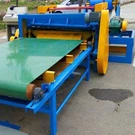
There are several tools available for cutting and beveling pipes, including saws, plasma cutters, and oxy - fuel torches. Each tool has its own advantages and limitations, and the choice of tool depends on the pipe material, thickness, and the required precision.
Step 4: Fit - up of the Pipes
After cutting and beveling, the pipes need to be properly fit - up before welding. This involves aligning the pipes so that the beveled edges are in contact and the gap between the pipes is within the specified range. The fit - up should be checked using measuring tools such as calipers and straightedges.
A proper fit - up ensures that the welding process can proceed smoothly and that the weld will have the desired strength and integrity. If the pipes are not properly aligned or if the gap is too large or too small, it can lead to welding defects such as lack of fusion or excessive penetration.
Step 5: Pre - heating the Pipes (if required)
Some types of steel pipes require pre - heating before welding to reduce the risk of cracking. Pre - heating helps to slow down the cooling rate of the weld metal and the heat - affected zone, which can prevent the formation of hard and brittle microstructures.
The pre - heating temperature depends on the pipe material, thickness, and the welding process. For example, for high - strength steels, pre - heating temperatures can range from 100°C to 300°C. Pre - heating can be achieved using various methods, such as electric heating blankets, gas torches, or induction heating systems.
Step 6: Selecting the Appropriate Welding Equipment
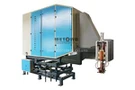
Choosing the right welding equipment is crucial for a successful welding operation. As a steel pipe welder supplier, I offer a range of high - quality welding machines that are suitable for different types of steel pipes and welding applications.
For example, the Solid State HF Welder Machine is a state - of - the - art welding machine that uses high - frequency technology to provide efficient and precise welding. It is suitable for welding thin - walled steel pipes with high productivity.
The Pipeline Welding Machine is specifically designed for welding large - diameter pipes used in pipeline construction. It offers high - power output and advanced control features to ensure consistent and reliable welds.
Another option is the Silicon Carbide High Frequency Switch Welder, which is known for its high efficiency and fast welding speed. This welder is suitable for a wide range of steel pipe welding applications.
Step 7: Welding the Pipes
Once all the preparation steps have been completed, the pipes are ready to be welded. The welding process should be carried out in accordance with the welding procedure specification (WPS). The WPS includes details such as the welding process, welding parameters (such as current, voltage, and travel speed), and the type of filler material to be used.
During the welding process, it is important to maintain a stable arc and a consistent travel speed. The welder should also pay attention to the appearance of the weld bead and make adjustments to the welding parameters as needed. After welding, the weld should be allowed to cool slowly to prevent cracking.
Step 8: Post - Weld Heat Treatment (if required)
In some cases, post - weld heat treatment (PWHT) may be required to improve the mechanical properties of the weld and the heat - affected zone. PWHT can relieve residual stresses, improve the toughness of the weld, and reduce the risk of cracking.
The type and duration of PWHT depend on the pipe material, thickness, and the welding process. Common post - weld heat treatment methods include stress - relieving annealing, normalizing, and tempering.
Step 9: Inspection of the Weld
After welding and any post - weld heat treatment, the weld should be inspected to ensure that it meets the quality standards. Non - destructive testing methods such as visual inspection, ultrasonic testing, radiographic testing, and magnetic particle testing can be used to detect any internal or surface defects in the weld.
If any defects are found during the inspection, appropriate corrective actions should be taken, such as re - welding or grinding and repairing the defective area.
In conclusion, preparing a steel pipe for welding is a complex process that requires attention to detail at every step. By following these steps and using the appropriate equipment, high - quality and reliable welds can be achieved. If you are in need of steel pipe welding equipment or have any questions about the steel pipe welding process, please feel free to contact us for more information and to discuss your specific requirements. We are committed to providing you with the best solutions for your steel pipe welding needs.
References
- AWS D1.1/D1.1M:2020, Structural Welding Code - Steel, American Welding Society.
- ASME Boiler and Pressure Vessel Code, Section IX: Welding and Brazing Qualifications, American Society of Mechanical Engineers.
- Welding Handbook, Volume 1: Welding Science and Technology, American Welding Society.