


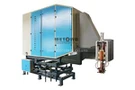


As a seasoned supplier in the melting furnace industry, I've witnessed firsthand the transformative impact of vacuum melting furnaces on various sectors. These sophisticated pieces of equipment are at the forefront of modern metal processing, offering unparalleled precision and quality. In this blog, I'll delve into the key features that make vacuum melting furnaces an indispensable asset for businesses across the globe.
1. High - Purity Melting Environment
One of the most significant features of a vacuum melting furnace is its ability to create a high - purity melting environment. By removing air and other contaminants from the melting chamber, the furnace minimizes the risk of oxidation and contamination of the metal being melted. This is crucial for industries such as aerospace, medical, and electronics, where the purity of the metal directly affects the performance and reliability of the final product.
In a traditional melting process, oxygen in the air can react with the metal, forming oxides that can weaken the material or cause defects. In a vacuum melting furnace, however, the absence of oxygen prevents these reactions from occurring. For example, when melting titanium, which is highly reactive with oxygen at high temperatures, a vacuum environment ensures that the titanium retains its excellent mechanical properties and corrosion resistance.
2. Precise Temperature Control
Another essential feature of vacuum melting furnaces is their precise temperature control. These furnaces are equipped with advanced temperature sensors and control systems that can maintain a consistent temperature within a narrow range throughout the melting process. This precision is vital for achieving the desired metallurgical properties of the molten metal.
Different metals have specific melting points and require precise temperature profiles during melting and solidification. For instance, in the production of superalloys used in jet engines, the temperature must be carefully controlled to ensure the proper formation of the alloy's microstructure. A vacuum melting furnace allows operators to set and maintain the exact temperature required for each stage of the process, resulting in high - quality, homogeneous alloys.
3. Customizable Melting Capacity
Vacuum melting furnaces come in a wide range of sizes and capacities, allowing businesses to choose the model that best suits their production needs. Whether you're a small - scale research laboratory or a large - scale industrial manufacturer, there's a vacuum melting furnace available to meet your requirements.
Small - capacity furnaces are ideal for research and development purposes, where only a small amount of metal needs to be melted for testing and experimentation. On the other hand, large - capacity furnaces are used in mass production, where high volumes of molten metal are required. For example, in the automotive industry, large - capacity vacuum melting furnaces are used to produce engine components in large quantities.
4. Advanced Stirring Mechanisms
Many vacuum melting furnaces are equipped with advanced stirring mechanisms to ensure uniform mixing of the molten metal. Stirring helps to distribute heat evenly throughout the melt, prevent the formation of hot spots, and promote the homogeneous distribution of alloying elements.
There are several types of stirring mechanisms used in vacuum melting furnaces, including electromagnetic stirring and mechanical stirring. Electromagnetic stirring uses magnetic fields to create a rotating motion in the molten metal, while mechanical stirring involves the use of a stirrer blade or paddle. These mechanisms can be adjusted to control the intensity and direction of the stirring, depending on the specific requirements of the melting process.
5. Energy Efficiency
In today's environmentally conscious world, energy efficiency is a crucial consideration for any industrial equipment. Vacuum melting furnaces are designed with energy - saving features to reduce operating costs and minimize their environmental impact.
These furnaces use advanced insulation materials to reduce heat loss, and their heating systems are optimized to consume less energy while still achieving the required melting temperatures. Additionally, some vacuum melting furnaces are equipped with regenerative heat recovery systems that capture and reuse the heat generated during the melting process, further improving energy efficiency.


6. Safety Features
Safety is always a top priority in any industrial setting, and vacuum melting furnaces are no exception. These furnaces are equipped with a variety of safety features to protect operators and prevent accidents.
For example, they have pressure relief valves to prevent over - pressurization in the melting chamber, and interlock systems to ensure that the furnace cannot be opened or operated unless all safety conditions are met. Additionally, many vacuum melting furnaces are equipped with emergency stop buttons and alarms to alert operators in case of an emergency.
7. Automation and Remote Monitoring
With the advancement of technology, modern vacuum melting furnaces are increasingly being equipped with automation and remote monitoring capabilities. Automation allows for more efficient and consistent operation of the furnace, reducing the need for manual intervention and minimizing the risk of human error.
Remote monitoring systems enable operators to monitor the furnace's performance and status from a remote location, using a computer or mobile device. This allows for real - time troubleshooting and maintenance, improving productivity and reducing downtime. For example, if a temperature sensor detects an abnormal reading, the operator can receive an alert on their mobile device and take immediate action to correct the problem.
Conclusion
In conclusion, vacuum melting furnaces offer a wide range of features that make them an essential tool for modern metal processing. Their high - purity melting environment, precise temperature control, customizable melting capacity, advanced stirring mechanisms, energy efficiency, safety features, and automation capabilities make them a valuable investment for businesses in various industries.
If you're in the market for a Melting Furnace, M.F Melting Furnace, or Melting Furnace, I encourage you to contact us to discuss your specific requirements. Our team of experts can help you choose the right furnace for your application and provide you with comprehensive support throughout the purchasing process. Let's work together to take your metal processing to the next level.
References
- "Handbook of Vacuum Technology" by O'Hanlon, John F.
- "Principles of Metal Casting" by Campbell, John.
- "Advanced Materials Processing" byASM International.