







Hey there! As a cable supplier, I get asked a lot about the differences between flexible and rigid cables. It's a pretty important topic, especially if you're in the market for new cables for your projects, whether it's for a Water Pump, a Gear Grinding Machine, or an Air Compressor. So, let's dive right in and break down the key differences between these two types of cables.
Physical Structure
First off, let's talk about the physical structure. Flexible cables are, well, flexible! They're designed to bend and twist without breaking. This is thanks to the way they're constructed, usually with multiple thin strands of wire bundled together. These strands can move around a bit, allowing the cable to be bent and shaped easily.
On the other hand, rigid cables are made with fewer, thicker conductors. This makes them less likely to bend and more stable in a fixed position. They're like the strong, immovable posts in a construction project. Rigid cables are often used in situations where the cable doesn't need to be moved or adjusted frequently.

Installation
When it comes to installation, flexible cables are a breeze. You can snake them through tight spaces, around corners, and even in irregularly shaped areas. They're perfect for applications where the layout is complex or where you need to make adjustments later on. For example, in a data center where cables need to be rerouted as new equipment is added, flexible cables are the go-to choice.
Rigid cables, however, are better suited for straightforward installations. They're ideal for fixed installations where the cable just needs to run in a straight line from point A to point B. Installing rigid cables often requires more precise planning and measurement since they can't be easily adjusted once they're in place.
Flexibility and Durability
As I mentioned earlier, flexible cables are all about flexibility. But this flexibility doesn't come at the cost of durability. In fact, many flexible cables are designed to withstand a lot of bending and twisting over time. They're often used in applications where the cable will be moved or manipulated regularly, like in robotics or computer peripherals.
Rigid cables, on the other hand, are more durable in terms of physical strength. They're less likely to be damaged by external forces like being stepped on or crushed. However, because they're not as flexible, they can be more prone to damage if they're forced to bend beyond their limits.
Cost
Cost is always a factor when it comes to choosing the right cable. Generally speaking, flexible cables tend to be a bit more expensive than rigid cables. This is because the manufacturing process for flexible cables is more complex, involving the bundling of multiple thin strands. But the extra cost can be worth it if you need the flexibility and ease of installation that they offer.
Rigid cables, on the other hand, are usually more budget-friendly. They're simpler to manufacture, which means they can be produced at a lower cost. If you're working on a large-scale project where cost is a major concern and you don't need the flexibility of a flexible cable, rigid cables might be the way to go.
Electrical Performance
When it comes to electrical performance, both types of cables have their strengths. Flexible cables are often better at handling high-frequency signals. The multiple strands in a flexible cable can reduce the skin effect, which is the tendency for electrical current to flow mostly on the surface of a conductor at high frequencies. This makes them a good choice for applications like telecommunications and high-speed data transfer.
Rigid cables, on the other hand, are better at conducting electricity over long distances. The thicker conductors in a rigid cable have less resistance, which means less power is lost as heat during transmission. This makes them ideal for power distribution applications, such as in buildings or industrial facilities.
Application Examples
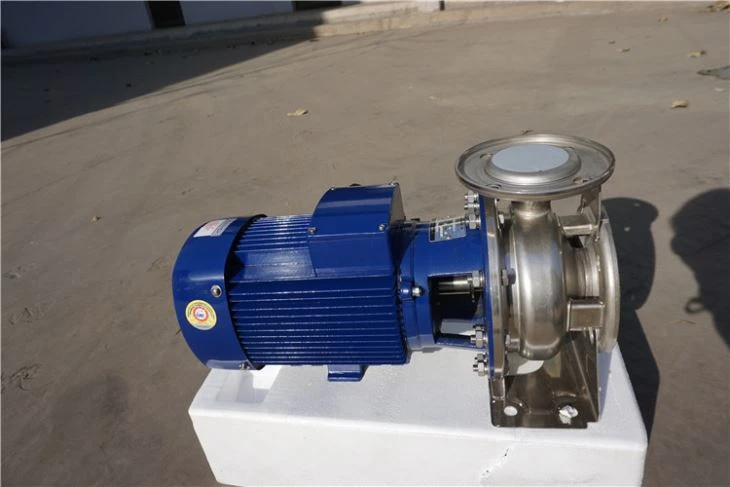
Let's take a look at some real-world application examples to see how these differences play out. In the case of a Water Pump, a flexible cable might be used if the pump needs to be moved or adjusted occasionally. The flexibility of the cable would allow for easy repositioning without the risk of damage.
For a Gear Grinding Machine, a rigid cable might be the better choice. Since the machine is usually in a fixed position, a rigid cable would provide a stable and reliable power connection.
And for an Air Compressor, the choice between a flexible and rigid cable would depend on the specific setup. If the compressor is moved around frequently, a flexible cable would be more appropriate. But if it's a stationary unit, a rigid cable would be a good option.
Conclusion
So, to sum it up, the main differences between flexible and rigid cables come down to their physical structure, installation requirements, flexibility, durability, cost, and electrical performance. Each type of cable has its own strengths and weaknesses, and the right choice depends on your specific needs and application.
If you're still not sure which type of cable is right for you, don't hesitate to reach out. As a cable supplier, I'm here to help you make the best decision for your project. Whether you need a high-quality flexible cable for a complex installation or a reliable rigid cable for a power distribution system, I've got you covered. Just drop me a line, and we can start discussing your requirements.
References:
- Electrical Engineering Handbook, edited by Richard C. Dorf
- Cable Installation Manuals, various manufacturers