


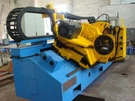


In the realm of industrial manufacturing, the Computer Flying Saw has emerged as a revolutionary tool, offering a plethora of advantages that significantly enhance productivity, precision, and efficiency. As a leading supplier of Computer Flying Saws, I have witnessed firsthand the transformative impact these machines have on various industries. In this blog post, I will delve into the key advantages of using a Computer Flying Saw and explore how it can benefit your manufacturing operations.
1. High Precision Cutting
One of the most significant advantages of a Computer Flying Saw is its ability to achieve high precision cutting. These machines are equipped with advanced control systems that allow for accurate positioning and cutting of materials. The computerized control ensures that the saw blade moves precisely along the cutting path, resulting in clean, straight cuts with minimal deviation. This high level of precision is crucial in industries where tight tolerances are required, such as the automotive, aerospace, and construction sectors.
For example, in the automotive industry, Computer Flying Saws are used to cut tubes and pipes for exhaust systems, chassis components, and other critical parts. The precise cutting ensures that the parts fit together perfectly, reducing the need for additional machining and assembly operations. This not only improves the quality of the final product but also increases production efficiency and reduces costs.
2. Increased Productivity
Another major advantage of using a Computer Flying Saw is the significant increase in productivity. These machines are designed to operate at high speeds, allowing for rapid cutting of materials. The computerized control system enables the saw to automatically adjust its cutting speed and feed rate based on the material being cut, ensuring optimal performance and maximum productivity.
In addition, Computer Flying Saws can be integrated with other manufacturing processes, such as tube mills and welding machines, to create a seamless production line. This integration eliminates the need for manual handling and transportation of materials between different processes, reducing downtime and increasing overall production efficiency.
For instance, in a tube manufacturing plant, a Computer Flying Saw can be installed at the end of a tube mill to cut the tubes to the desired length as they are being produced. This continuous cutting process eliminates the need for batch processing, resulting in a significant increase in production output.
3. Versatility
Computer Flying Saws are highly versatile machines that can be used to cut a wide range of materials, including various types of metals, plastics, and composites. They can be equipped with different types of saw blades, such as Friction Saw, High Precision Cold Flying Saw, and Milling Flying Saw, depending on the material and cutting requirements.
This versatility makes Computer Flying Saws suitable for a wide range of applications in different industries. For example, in the metal fabrication industry, they can be used to cut structural steel, aluminum profiles, and stainless steel tubes. In the plastics industry, they can be used to cut plastic pipes, sheets, and rods.
4. Reduced Waste
Computer Flying Saws are designed to minimize waste by making precise cuts and optimizing the use of materials. The computerized control system ensures that the saw blade cuts the material exactly where it needs to be cut, reducing the amount of scrap and waste generated.


In addition, Computer Flying Saws can be programmed to make multiple cuts on a single piece of material, maximizing the utilization of the material and reducing waste. This is particularly beneficial in industries where materials are expensive or in limited supply.
For example, in a metal fabrication shop, a Computer Flying Saw can be used to cut a large sheet of metal into multiple smaller parts. The computerized control system can optimize the cutting pattern to minimize the amount of scrap material, resulting in significant cost savings.
5. Improved Safety
Safety is a top priority in any manufacturing environment, and Computer Flying Saws are designed with several safety features to protect operators and prevent accidents. These machines are equipped with guards and shields to prevent contact with the saw blade, and they also have emergency stop buttons and other safety devices to ensure quick shutdown in case of an emergency.
In addition, the computerized control system allows for remote operation of the saw, reducing the need for operators to be in close proximity to the cutting area. This further enhances safety and reduces the risk of injuries.
6. Ease of Use and Maintenance
Computer Flying Saws are relatively easy to use and maintain, making them a popular choice for manufacturers of all sizes. The computerized control system provides a user-friendly interface that allows operators to easily program and control the saw. The system also provides real-time feedback on the cutting process, allowing operators to monitor and adjust the settings as needed.
In terms of maintenance, Computer Flying Saws are designed with durable components and require minimal maintenance. The saw blades can be easily replaced when they become worn, and the machine can be regularly cleaned and lubricated to ensure optimal performance.
7. Cost-Effectiveness
Despite their advanced features and capabilities, Computer Flying Saws are a cost-effective solution for many manufacturing applications. The increased productivity, reduced waste, and improved quality of the final product result in significant cost savings over the long term.
In addition, the versatility of Computer Flying Saws allows them to be used in multiple applications, reducing the need for multiple machines and equipment. This not only saves on capital investment but also reduces the cost of maintenance and operation.
Conclusion
In conclusion, the advantages of using a Computer Flying Saw are numerous and significant. From high precision cutting and increased productivity to versatility, reduced waste, improved safety, ease of use and maintenance, and cost-effectiveness, these machines offer a wide range of benefits that can transform your manufacturing operations.
As a supplier of Computer Flying Saws, we are committed to providing our customers with the highest quality machines and the best possible service. If you are interested in learning more about how a Computer Flying Saw can benefit your manufacturing operations, please do not hesitate to contact us. We would be happy to discuss your specific requirements and provide you with a customized solution.
References
- "Advanced Manufacturing Technology: Principles and Applications" by David A. Dornfeld
- "Industrial Automation: Theory and Practice" by B. P. Singh
- "Cutting Tool Technology: Fundamentals and Applications" by Peter Oxley