


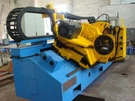


The quality of a cut is a critical factor in many industrial applications, and the cutting speed plays a significant role in determining this quality. As a supplier of Friction Saws, I have witnessed firsthand how the right cutting speed can enhance the efficiency and precision of the cutting process. In this blog, I will explore how cutting speed affects the quality of the cut and why it is essential to choose the appropriate speed for your specific needs.


Understanding Cutting Speed
Cutting speed refers to the rate at which the cutting tool moves relative to the workpiece. It is typically measured in surface feet per minute (SFM) or meters per minute (m/min). The cutting speed is influenced by several factors, including the type of material being cut, the type of cutting tool, and the desired quality of the cut.
Impact on Surface Finish
One of the most noticeable effects of cutting speed on the quality of the cut is the surface finish. A higher cutting speed generally results in a smoother surface finish. This is because at higher speeds, the cutting tool removes material more rapidly, reducing the amount of time the tool spends in contact with the workpiece. As a result, there is less opportunity for the tool to cause surface damage or leave behind rough edges.
However, if the cutting speed is too high, it can also lead to problems. For example, excessive heat can be generated, which can cause the material to melt or burn, resulting in a poor surface finish. Additionally, high cutting speeds can cause the cutting tool to wear out more quickly, leading to increased costs and reduced productivity.
On the other hand, a lower cutting speed may result in a rougher surface finish. This is because the tool has more time to interact with the workpiece, which can cause it to dig into the material and create uneven surfaces. However, a lower cutting speed can also be beneficial in some cases. For example, when cutting hard or brittle materials, a lower speed can help prevent the material from cracking or breaking.
Influence on Dimensional Accuracy
Cutting speed also has a significant impact on the dimensional accuracy of the cut. A higher cutting speed can lead to better dimensional accuracy because it reduces the amount of time the tool spends in contact with the workpiece, minimizing the potential for thermal expansion and distortion. Additionally, at higher speeds, the tool is less likely to deflect or vibrate, which can also improve the accuracy of the cut.
However, if the cutting speed is too high, it can cause the tool to chatter or vibrate, which can result in dimensional inaccuracies. Chattering occurs when the cutting tool oscillates at a frequency that is close to the natural frequency of the workpiece or the machine. This can cause the tool to cut unevenly, resulting in a poor surface finish and inaccurate dimensions.
A lower cutting speed may also lead to dimensional inaccuracies. This is because the tool has more time to interact with the workpiece, which can cause it to deflect or bend. Additionally, at lower speeds, the tool is more likely to generate heat, which can cause the material to expand and distort, leading to inaccurate dimensions.
Effect on Tool Life
The cutting speed also affects the life of the cutting tool. A higher cutting speed generally results in a shorter tool life because it generates more heat and wear on the tool. The heat generated during the cutting process can cause the tool to soften and lose its hardness, making it more prone to wear and breakage. Additionally, the high speeds can cause the tool to experience more stress and fatigue, which can also reduce its lifespan.
However, if the cutting speed is too low, it can also lead to premature tool wear. This is because the tool has to work harder to remove the material, which can cause it to wear out more quickly. Additionally, at lower speeds, the tool may not be able to cut through the material cleanly, which can cause it to rub against the workpiece and generate more heat and wear.
To maximize tool life, it is essential to choose the appropriate cutting speed for the specific material and cutting tool being used. This may require some experimentation and testing to find the optimal speed that balances the need for a high-quality cut with the desire to extend the tool's lifespan.
Choosing the Right Cutting Speed
Choosing the right cutting speed is crucial for achieving the desired quality of the cut. There are several factors to consider when selecting the cutting speed, including the type of material being cut, the type of cutting tool, the machine's capabilities, and the desired surface finish and dimensional accuracy.
For example, when cutting soft materials such as aluminum or brass, a higher cutting speed can be used to achieve a smooth surface finish and good dimensional accuracy. However, when cutting hard materials such as steel or titanium, a lower cutting speed may be necessary to prevent the tool from overheating and wearing out too quickly.
It is also important to consider the type of cutting tool being used. Different cutting tools have different optimal cutting speeds, depending on their design and material. For example, carbide cutting tools can generally handle higher cutting speeds than high-speed steel tools.
In addition to the material and the cutting tool, the machine's capabilities also play a role in determining the appropriate cutting speed. The machine's power, spindle speed, and feed rate all affect the cutting process and need to be taken into account when selecting the cutting speed.
If you are unsure about the appropriate cutting speed for your specific application, it is recommended to consult with a cutting tool manufacturer or a machining expert. They can provide you with valuable advice and guidance based on their experience and knowledge.
Our Friction Saws and Cutting Speed
As a supplier of Friction Saws, we understand the importance of cutting speed in achieving high-quality cuts. Our Friction Saws are designed to operate at a wide range of cutting speeds, allowing you to choose the optimal speed for your specific application.
Our Automatic Cutting Machine is a state-of-the-art machine that offers precise control over the cutting speed. It is equipped with advanced technology that allows you to adjust the speed according to the material being cut and the desired quality of the cut. This ensures that you can achieve consistent and accurate cuts every time.
Our Cold Flying Cutting Saw is another excellent option for high-quality cutting. It is designed to operate at high speeds while maintaining a cool cutting temperature, which helps to prevent heat-related damage to the material and the cutting tool. This results in a smooth surface finish and excellent dimensional accuracy.
Our Flying Cold Saw is a versatile machine that can handle a variety of cutting applications. It offers a wide range of cutting speeds and can be customized to meet your specific needs. Whether you are cutting small or large diameter tubes, our Flying Cold Saw can provide you with the precision and efficiency you need.
Conclusion
In conclusion, the cutting speed has a significant impact on the quality of the cut. It affects the surface finish, dimensional accuracy, and tool life. By choosing the appropriate cutting speed for your specific application, you can achieve a high-quality cut that meets your requirements.
As a supplier of Friction Saws, we are committed to providing our customers with the best cutting solutions. Our range of Automatic Cutting Machine, Cold Flying Cutting Saw, and Flying Cold Saw are designed to offer precise control over the cutting speed, allowing you to achieve the desired quality of the cut.
If you are interested in learning more about our Friction Saws or need help choosing the right cutting speed for your application, please feel free to contact us. We would be happy to assist you with your procurement needs and discuss how our products can help you improve your cutting process.
References
- Kalpakjian, S., & Schmid, S. R. (2010). Manufacturing Engineering and Technology (6th ed.). Pearson.
- Boothroyd, G., Dewhurst, P., & Knight, W. A. (2011). Product Design for Manufacturing and Assembly (2nd ed.). CRC Press.
- Stephenson, D. A., & Agapiou, J. S. (2006). Metal Cutting Theory and Practice (2nd ed.). CRC Press.