




Hey there! As a supplier of cooling towers, I often get asked about how different components work, and one question that pops up quite a bit is about drift eliminators. So, I thought I'd take a few minutes to break down how a drift eliminator works in a cooling tower.
First off, let's talk about what a cooling tower does. In simple terms, a cooling tower is a device that rejects waste heat to the atmosphere through the cooling of a water stream to a lower temperature. It's like a big radiator for industrial processes or HVAC systems. The water is cooled by coming into contact with air, and this process involves evaporation. But here's the thing: when water evaporates, some of it can get carried away by the air as tiny droplets. That's where the drift eliminator comes in.
What is Drift?
Drift is the water droplets that are carried out of the cooling tower by the moving air. These droplets can contain dissolved solids, chemicals, and other contaminants from the cooling water. If drift is not controlled, it can cause a bunch of problems. For one, it's a waste of water, which is not only bad for the environment but also adds to the operating costs. Secondly, the drift can deposit these contaminants on nearby equipment, buildings, and vegetation, leading to corrosion, fouling, and other issues.
How Does a Drift Eliminator Work?
A drift eliminator is designed to capture these water droplets before they can escape the cooling tower. It does this by using a combination of baffles, vanes, and other structures that force the air to change direction multiple times. As the air changes direction, the water droplets, which are heavier than the air, continue moving in a straight line due to their inertia and collide with the surfaces of the drift eliminator.
Once the droplets hit the surfaces of the drift eliminator, they coalesce (combine) into larger droplets. These larger droplets then fall back into the cooling tower due to gravity, where they can be reused in the cooling process. The air, now free of most of the water droplets, can then exit the cooling tower.
There are different types of drift eliminators, but the most common ones are the blade-type and the mesh-type.
Blade-Type Drift Eliminators
Blade-type drift eliminators consist of a series of parallel or angled blades. The air is forced to flow through the narrow channels between the blades, and as it does so, it changes direction several times. The water droplets collide with the blades and collect on their surfaces. The blades are usually designed with a shape that allows the collected water to drain back into the cooling tower easily.
Mesh-Type Drift Eliminators
Mesh-type drift eliminators use a fine mesh or screen to capture the water droplets. The air passes through the mesh, and the water droplets get trapped in the mesh fibers. Similar to the blade-type, the trapped droplets coalesce and eventually fall back into the cooling tower.
Importance of Drift Eliminators in Cooling Towers
The importance of drift eliminators in cooling towers cannot be overstated. As mentioned earlier, they help reduce water loss, which is a significant cost-saving measure. In addition, they prevent the spread of contaminants, which can extend the lifespan of nearby equipment and reduce maintenance costs.
Moreover, drift eliminators play a crucial role in meeting environmental regulations. Many local and national regulations limit the amount of drift that can be emitted from a cooling tower. By using an effective drift eliminator, cooling tower operators can ensure that they are in compliance with these regulations.

Our Cooling Tower Products and Drift Eliminators
At our company, we offer a range of cooling tower products, including Circular Counter-flow Cooling Tower. These cooling towers are designed with high-efficiency drift eliminators to ensure minimal water loss and maximum environmental protection.
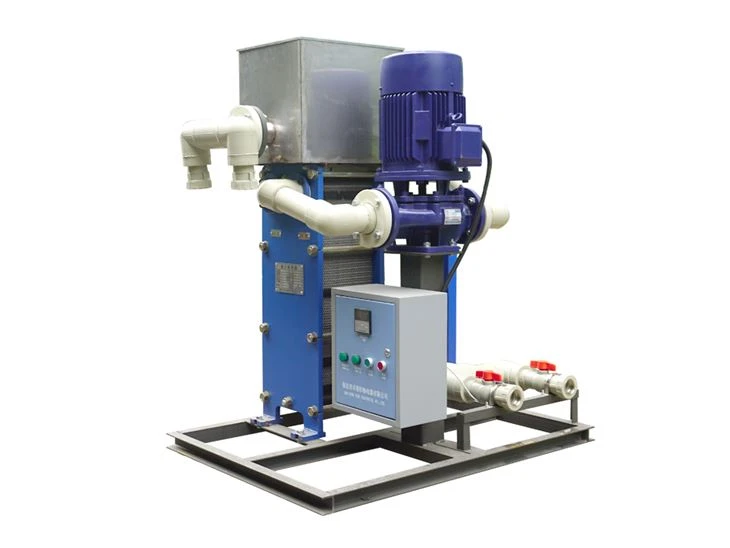
We also provide Water-water Heat Exchanger and Plate Heat Exchanger Machine as part of our comprehensive cooling solutions. Our drift eliminators are carefully engineered to work seamlessly with these products, providing optimal performance and reliability.
Contact Us for Purchasing and Consultation
If you're in the market for a cooling tower or need to upgrade your existing drift eliminator, we'd love to hear from you. Our team of experts can help you choose the right product for your specific needs and provide you with all the information you need to make an informed decision. Whether you're a small business or a large industrial facility, we have the solutions to meet your cooling requirements. So, don't hesitate to reach out and start a conversation about your cooling needs.
References
- Cooling Tower Institute. (n.d.). Cooling Tower Fundamentals.
- ASHRAE Handbook. (2019). HVAC Systems and Equipment.