



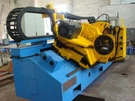


As a supplier of decoilers, I often encounter inquiries from customers about various features and functions of our products. One question that frequently comes up is whether a decoiler has a protection function against over - tension. In this blog post, I will delve into this topic in detail, exploring the importance of over - tension protection, how decoilers achieve this protection, and the benefits it brings to users.
The Importance of Over - Tension Protection
Over - tension in a decoiling process can lead to a multitude of problems. When the tension on the material being uncoiled exceeds its limit, it can cause the material to stretch, deform, or even break. This is especially critical when dealing with thin or delicate materials such as aluminum foils, copper sheets, or high - strength steel strips. For example, in the production of electronic components where thin metal sheets are used, over - tension can result in dimensional inaccuracies, which may render the components useless.
Moreover, over - tension can also put excessive stress on the decoiler itself. This can lead to premature wear and tear of mechanical parts, such as bearings, gears, and shafts. In severe cases, it may even cause structural damage to the decoiler, resulting in costly repairs and production downtime. Therefore, having a reliable over - tension protection function is essential for both the quality of the material being processed and the longevity of the decoiler.
How Decoilers Achieve Over - Tension Protection
There are several ways in which decoilers can be equipped with over - tension protection. One of the most common methods is through the use of tension control systems. These systems typically consist of sensors, controllers, and actuators.
The sensors are responsible for measuring the tension of the material during the decoiling process. They can be installed at various points along the material path, such as at the exit of the decoiler or on the guiding rollers. The data collected by the sensors is then sent to the controller, which analyzes the tension readings and compares them with the pre - set tension limits.
If the measured tension exceeds the set limit, the controller will send a signal to the actuator. The actuator can be a motor, a brake, or a clutch, depending on the design of the decoiler. The actuator will then adjust the speed or torque of the decoiler to reduce the tension on the material. For example, in a Decoiler with an electric motor drive, the controller may reduce the motor speed to slow down the decoiling process and relieve the tension.
Another approach to over - tension protection is the use of mechanical safety devices. For instance, some decoilers are equipped with a shear pin or a torque limiter. A shear pin is a small, sacrificial component that is designed to break when the torque exceeds a certain value. When the shear pin breaks, it disconnects the power transmission between the motor and the decoiler spindle, preventing further increase in tension. A torque limiter, on the other hand, slips when the torque reaches a pre - determined level, allowing the decoiler to rotate freely without applying excessive force on the material.
Types of Decoilers and Their Over - Tension Protection Features
Double Arms Uncoiler
The Double Arms Uncoiler is a popular choice for applications that require high - speed and continuous decoiling. This type of decoiler usually has a more sophisticated tension control system to ensure smooth and stable operation. It may have multiple sensors installed on both arms to accurately measure the tension of the material on each side. The controller can then independently adjust the tension on each arm, allowing for precise control even when the material is not evenly distributed.
In addition, double arms uncoilers often come with a redundant safety mechanism. For example, in addition to the electronic tension control system, they may also be equipped with a mechanical torque limiter. This provides an extra layer of protection in case the electronic system fails, ensuring the safety of the operator and the integrity of the material.
Single Head Decoiler
The Single Head Decoiler is a simpler and more cost - effective option for small - scale or intermittent decoiling operations. While it may not have the same level of sophistication as the double arms uncoiler, it still offers reliable over - tension protection.
Most single head decoilers are equipped with a basic tension control system that uses a sensor and a brake. The sensor measures the tension of the material, and when the tension exceeds the set limit, the brake is applied to slow down the decoiling speed. Some single head decoilers also have a manual adjustment mechanism, allowing the operator to fine - tune the tension according to the specific requirements of the material.
Benefits of Over - Tension Protection in Decoilers
The presence of over - tension protection in decoilers brings several benefits to users. Firstly, it improves the quality of the processed material. By preventing over - tension, the material is less likely to be damaged or deformed, resulting in higher - quality products. This is particularly important in industries where precision and consistency are crucial, such as the automotive, aerospace, and electronics industries.
Secondly, over - tension protection reduces maintenance costs. By protecting the mechanical parts of the decoiler from excessive stress, it extends the service life of the equipment. This means fewer breakdowns and less frequent replacement of parts, resulting in significant cost savings over the long term.


Finally, it enhances the safety of the workplace. Over - tension can cause sudden and unpredictable movements of the material, which can pose a danger to operators. With over - tension protection, the risk of such accidents is greatly reduced, creating a safer working environment.
Conclusion
In conclusion, a decoiler can indeed have a protection function against over - tension, and this function is crucial for the efficient and safe operation of the decoiling process. Whether you choose a Double Arms Uncoiler for high - speed continuous operation or a Single Head Decoiler for small - scale applications, having reliable over - tension protection is essential.
If you are in the market for a decoiler and are interested in learning more about our products and their over - tension protection features, please feel free to contact us for a detailed discussion. We are committed to providing high - quality decoilers that meet your specific needs and ensure the smooth and efficient operation of your production line.
References
- Smith, J. (2018). Tension Control in Decoiling Processes. Journal of Manufacturing Technology, 25(3), 123 - 135.
- Johnson, A. (2019). Safety Features in Decoilers. Industrial Equipment Magazine, 32(4), 78 - 85.
- Brown, C. (2020). The Impact of Over - Tension on Material Quality in Decoiling. Materials Science Review, 18(2), 56 - 64.