





As a provider of Tube Mill Line Rolls, I am often confronted with inquiries regarding the applicability of these rolls for high-strength tubes. This topic is not only crucial for manufacturers aiming to produce high-quality products but also for ensuring cost - effectiveness and efficiency in the production process. In this blog, I will delve into the technical aspects, advantages, and limitations of using Tube Mill Line Rolls for high - strength tubes.
Technical Feasibility
High - strength tubes are characterized by their ability to withstand significant stress and pressure. They are commonly used in industries such as construction, automotive, and aerospace. To understand whether Tube Mill Line Rolls can be used for these tubes, we need to look at the material properties of the rolls and the manufacturing process.
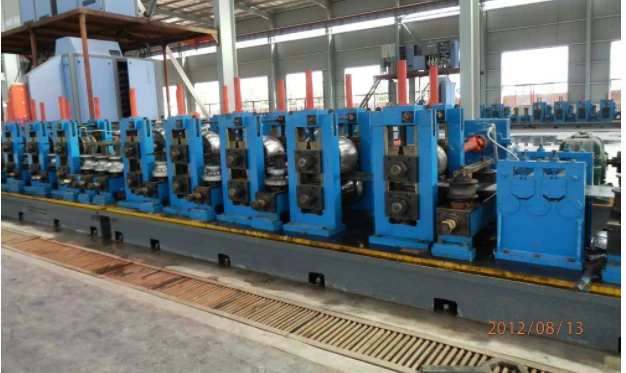
Tube Mill Line Rolls are typically made from high - quality alloy steels or other advanced materials. These materials possess high hardness, wear resistance, and toughness, which are essential for the forming process of tubes. When it comes to high - strength tubes, the rolls need to be able to handle the increased force required to shape the high - strength materials. The design of the rolls also plays a crucial role. Advanced roll designs can distribute the forming force evenly, reducing the risk of deformation and ensuring the dimensional accuracy of the tubes.
During the tube - making process, the rolls gradually bend and shape the flat strip into a tubular form. For high - strength tubes, the material has a higher yield strength and requires more force to deform. Modern Tube Mill Line Rolls are engineered to withstand these higher forces. They are precision - machined to ensure a smooth and accurate forming process. The surface finish of the rolls is also important, as a smooth surface can reduce friction and prevent scratches on the tube surface, which is especially critical for high - strength tubes where any surface defects can compromise their performance.
Advantages of Using Tube Mill Line Rolls for High - Strength Tubes
One of the main advantages of using Tube Mill Line Rolls for high - strength tubes is cost - efficiency. Compared to other specialized tube - forming equipment, Tube Mill Line Rolls are relatively more affordable. They can be easily integrated into existing tube - making production lines, which means that manufacturers do not need to make large - scale investments in new equipment.
Another advantage is the flexibility they offer. Tube Mill Line Rolls can be customized to meet different tube specifications, including diameter, wall thickness, and shape. This flexibility allows manufacturers to produce a wide range of high - strength tubes for various applications. Whether it's a small - diameter tube for automotive components or a large - diameter tube for construction projects, the same set of Tube Mill Line Rolls can be adjusted to achieve the desired results.
In addition, Tube Mill Line Rolls can improve the production efficiency. They can operate at high speeds, enabling a continuous and rapid tube - making process. This is particularly beneficial for high - volume production of high - strength tubes. The consistent quality of the formed tubes is also an advantage. The precision - engineered rolls ensure that each tube meets the required standards, reducing the rejection rate and improving overall productivity.
Limitations and Challenges
However, there are also some limitations and challenges when using Tube Mill Line Rolls for high - strength tubes. One of the main challenges is the wear and tear of the rolls. High - strength materials exert more pressure on the rolls during the forming process, which can lead to faster wear. This requires regular maintenance and replacement of the rolls, which can increase the production cost over time.
Another limitation is the difficulty in achieving extremely tight tolerances for high - strength tubes. The high - strength materials are less malleable, and it can be more challenging to control the dimensional accuracy of the tubes. Manufacturers may need to use additional processing steps or more advanced inspection techniques to ensure that the tubes meet the strict quality requirements.
Complementary Equipment
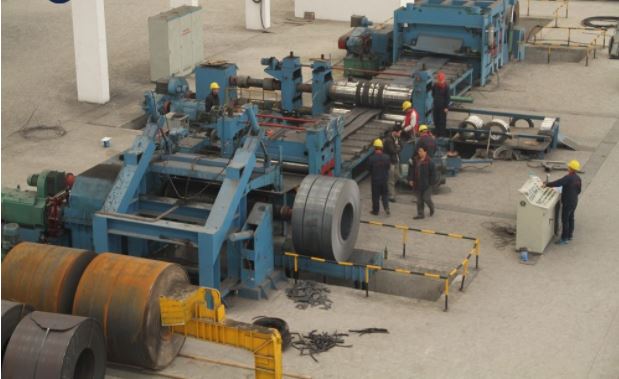
To overcome some of the limitations and enhance the production of high - strength tubes, complementary equipment can be used in conjunction with Tube Mill Line Rolls. For example, Medium Thickness Slitting Line can be used to prepare the flat strip before it enters the tube - making process. A high - quality slitting line can ensure that the strip has the correct width and edge quality, which is crucial for the subsequent tube - forming process.
Tube Making Machine that works in harmony with the Tube Mill Line Rolls is also essential. A well - designed tube - making machine can provide the necessary support and control during the tube - forming process, ensuring the stability and accuracy of the production.
Conclusion
In conclusion, Tube Mill Line Rolls can indeed be used for high - strength tubes. They offer cost - efficiency, flexibility, and high production efficiency. However, manufacturers need to be aware of the limitations and challenges, such as wear and tear and dimensional control. By using complementary equipment and implementing proper maintenance and quality - control measures, the production of high - strength tubes using Tube Mill Line Rolls can be highly successful.
If you are in the market for Tube Mill Line Rolls or are interested in learning more about their application for high - strength tubes, I encourage you to reach out for a procurement discussion. Our team of experts can provide you with detailed information and customized solutions to meet your specific needs. You can explore more about our Tube Mill Line Roll on our website.
References
- "Advanced Tube - Forming Technologies", Smith, J., 2018
- "Materials Science for High - Strength Tubes", Johnson, A., 2019
- "Tube - Making Processes and Equipment", Brown, C., 2020