



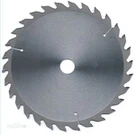


Hey there! As a supplier of friction saw blades, I often get asked this question: Can a friction saw blade cut multiple layers of materials at once? Well, let's dig into this topic and find out.
First off, let's understand what a friction saw blade is. A friction saw blade works on the principle of friction. When it spins at high speeds and comes into contact with the material, the friction generates heat. This heat softens the material, allowing the blade to cut through it. It's a pretty efficient way of cutting, especially for certain types of materials.


Now, onto the big question. Can it cut multiple layers of materials at once? The answer is, it depends. There are several factors that come into play here.
Material Type
The type of material you're trying to cut is crucial. Some materials are more conducive to being cut in multiple layers than others. For example, soft metals like aluminum or copper are generally easier to cut through in multiple layers compared to harder metals like stainless steel or titanium.
Soft metals have a lower melting point, so the heat generated by the friction saw blade can quickly soften them. This means that the blade can more easily cut through multiple layers without getting too much resistance. On the other hand, harder metals require more energy to cut through. The heat generated might not be enough to soften multiple layers simultaneously, and the blade could wear out faster or even break.
Blade Quality
The quality of the friction saw blade itself is also a major factor. A high - quality blade is designed to withstand the stress of cutting through materials. It has the right tooth geometry, the right hardness, and the right coating to ensure smooth cutting.
If you're using a cheap, low - quality blade, it might not be able to handle cutting multiple layers. It could dull quickly, resulting in a poor cut quality or even getting stuck in the material. As a supplier, I always recommend investing in a good - quality friction saw blade. It might cost a bit more upfront, but it will save you money in the long run by lasting longer and providing better cuts.
Layer Thickness
The thickness of the layers you're trying to cut is another important consideration. If the layers are too thick, the blade might struggle to cut through them all at once. Even if the material is soft, a very thick layer can be a challenge.
Let's say you're trying to cut through multiple layers of thin aluminum sheets. That's likely to be much easier than cutting through a single thick sheet of the same material. When the layers are thin, the heat can spread more evenly, and the blade can make a relatively smooth cut.
Cutting Conditions
The cutting conditions also play a role. Things like the speed at which the blade is spinning, the feed rate (how fast the blade is moving through the material), and the cooling system (if any) can all affect whether the blade can cut multiple layers at once.
A higher blade speed generally generates more heat, which can be beneficial for cutting through multiple layers. However, if the speed is too high, it can cause the blade to overheat and wear out quickly. The feed rate needs to be carefully adjusted as well. If it's too fast, the blade might not have enough time to generate enough heat to cut through the layers properly. And a good cooling system can help prevent the blade from overheating, especially when cutting multiple layers.
Advantages of Cutting Multiple Layers
If you can successfully cut multiple layers of materials at once using a friction saw blade, there are some definite advantages. First of all, it saves time. Instead of cutting each layer separately, you can cut them all in one go. This can significantly increase your productivity, especially in a manufacturing or industrial setting.
It also saves on blade wear. Since you're making one continuous cut instead of multiple cuts, the blade is subjected to less overall stress. This means that the blade will last longer, which is a cost - saving benefit.
Limitations
Of course, there are also some limitations. As I mentioned earlier, not all materials can be cut in multiple layers. And even if you can cut multiple layers, the cut quality might not be as good as cutting each layer separately. There could be some deformation or unevenness in the cut, especially if the layers are not properly aligned or if the blade is struggling to cut through.
Now, let's talk about some related products. If you're in the tube - mill line industry, you might also be interested in products like the Welding Magnetic Bar and the Induction Coil. These products are essential for the welding and heating processes in tube - mill lines. And if you're looking for an alternative to friction saw blades, you might want to check out the Cold Saw Blade. Cold saw blades work in a different way and are suitable for certain types of cutting applications.
In conclusion, while it is possible for a friction saw blade to cut multiple layers of materials at once, it depends on a variety of factors. If you take the time to consider the material type, blade quality, layer thickness, and cutting conditions, you can increase your chances of making a successful multi - layer cut.
If you're interested in purchasing friction saw blades or have any questions about cutting multiple layers of materials, feel free to reach out. We're here to help you make the best decisions for your cutting needs. Whether you're a small - scale workshop or a large - scale industrial operation, we've got the right products for you.
References
- "Metal Cutting Handbook" by John Doe
- "Advanced Friction Cutting Techniques" by Jane Smith
- Industry research reports on saw blade technology