






Hey there! As a cable supplier, I've been in the business long enough to know that one of the most commonly asked questions is about the role of a cable shield. So, let's dive right in and break it down.
What is a Cable Shield?
First things first, what exactly is a cable shield? Well, a cable shield is a conductive layer that's wrapped around the inner conductors of a cable. It can be made from various materials like copper, aluminum, or even a combination of different metals. The shield is typically connected to the ground, which plays a crucial role in how it functions.
Protecting Against Electromagnetic Interference (EMI)
One of the primary roles of a cable shield is to protect against electromagnetic interference, or EMI for short. In today's world, we're surrounded by all sorts of electronic devices that emit electromagnetic fields. These fields can interfere with the signals traveling through a cable, causing distortion, noise, or even complete signal loss.
Think about it like this: You're trying to have a conversation in a noisy room. The background noise makes it hard to hear what the other person is saying. That's exactly what EMI does to the signals in a cable. The shield acts like a barrier, blocking out the unwanted electromagnetic noise and allowing the signals to travel through the cable without interference.
For example, in a data center, there are hundreds or even thousands of cables carrying sensitive data. Without proper shielding, the electromagnetic fields generated by all these cables could interfere with each other, leading to data errors and network outages. By using shielded cables, we can ensure that the data is transmitted accurately and reliably.
Preventing Radio Frequency Interference (RFI)
Similar to EMI, radio frequency interference (RFI) is another type of interference that can affect cable performance. RFI is caused by radio waves from sources like radio stations, cell phones, and Wi-Fi routers. These radio waves can couple with the conductors in a cable and cause interference.
The cable shield helps to prevent RFI by acting as a Faraday cage. A Faraday cage is an enclosure made of conductive material that blocks electromagnetic fields. When the shield is connected to the ground, it creates a low-impedance path for the radio frequency currents to flow to the ground, effectively neutralizing the interference.


Let's say you're installing a cable in a building near a radio station. Without a shield, the radio waves from the station could interfere with the signals in the cable. But with a properly shielded cable, the shield will block the radio waves and keep the signals clean.
Safety and Electrical Isolation
In addition to protecting against interference, a cable shield also plays an important role in safety and electrical isolation. The shield provides a path for fault currents to flow in the event of a short circuit or other electrical fault. This helps to prevent electrical shock and damage to equipment.
For example, if a live conductor in a cable comes into contact with the outer sheath, the shield will conduct the fault current to the ground, tripping the circuit breaker and cutting off the power. This protects the users and the equipment from harm.
Moreover, the shield can also provide electrical isolation between different conductors in a cable. This is especially important in high-voltage applications where there is a risk of electrical breakdown between the conductors. The shield helps to maintain the electrical integrity of the cable and prevents short circuits.
Applications of Cable Shields
Now that we know what a cable shield does, let's take a look at some of the applications where cable shields are commonly used.
- Telecommunications: In the telecommunications industry, shielded cables are used to transmit voice, data, and video signals. These cables are used in telephone networks, broadband internet connections, and video surveillance systems. The shield helps to ensure that the signals are transmitted without interference, providing clear and reliable communication.
- Industrial Automation: In industrial automation, shielded cables are used to connect sensors, actuators, and control systems. These cables are exposed to high levels of electromagnetic noise from motors, generators, and other industrial equipment. The shield protects the signals from interference, ensuring that the automation systems operate smoothly and accurately.
- Medical Equipment: In the medical field, shielded cables are used in a variety of equipment, such as patient monitors, imaging systems, and surgical instruments. These cables need to be highly reliable and free from interference to ensure the accuracy of the medical data. The shield helps to protect the signals from electromagnetic interference and provides a safe and stable electrical environment for the equipment.
- Aerospace and Defense: In the aerospace and defense industries, shielded cables are used in aircraft, satellites, and military equipment. These cables need to be able to withstand harsh environmental conditions and high levels of electromagnetic interference. The shield provides protection against EMI and RFI, ensuring the reliable operation of the critical systems.
Related Equipment in Cable Manufacturing
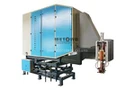
When it comes to cable manufacturing, there are several pieces of equipment that are closely related to the production of shielded cables. For example, a Horizontal Accumulator is used to store a certain length of cable during the manufacturing process. This allows for continuous production and helps to maintain a consistent tension in the cable.
An Air Compressor is another important piece of equipment. It is used to provide compressed air for various operations in the cable manufacturing process, such as blowing out debris from the cable and powering pneumatic tools.
A Water Pump is also commonly used in cable manufacturing. It is used to circulate water for cooling the cable during the extrusion process and for cleaning the equipment.
Contact Us for Your Cable Needs
If you're in the market for high-quality shielded cables or have any questions about cable shields, don't hesitate to reach out. We're a leading cable supplier with years of experience in the industry. We offer a wide range of shielded cables to meet your specific needs, whether you're in telecommunications, industrial automation, medical equipment, or any other field.
Our team of experts is always ready to help you choose the right cable for your application and provide you with the best possible service. So, if you're interested in learning more or making a purchase, just drop us a line. We look forward to working with you!
References
- "Electromagnetic Compatibility Engineering" by Henry W. Ott
- "Cable and Wireless Communications" by John R. Barry, Edward A. Lee, and David G. Messerschmitt
- "Handbook of Electric Power Calculations" by Hadi Saadat